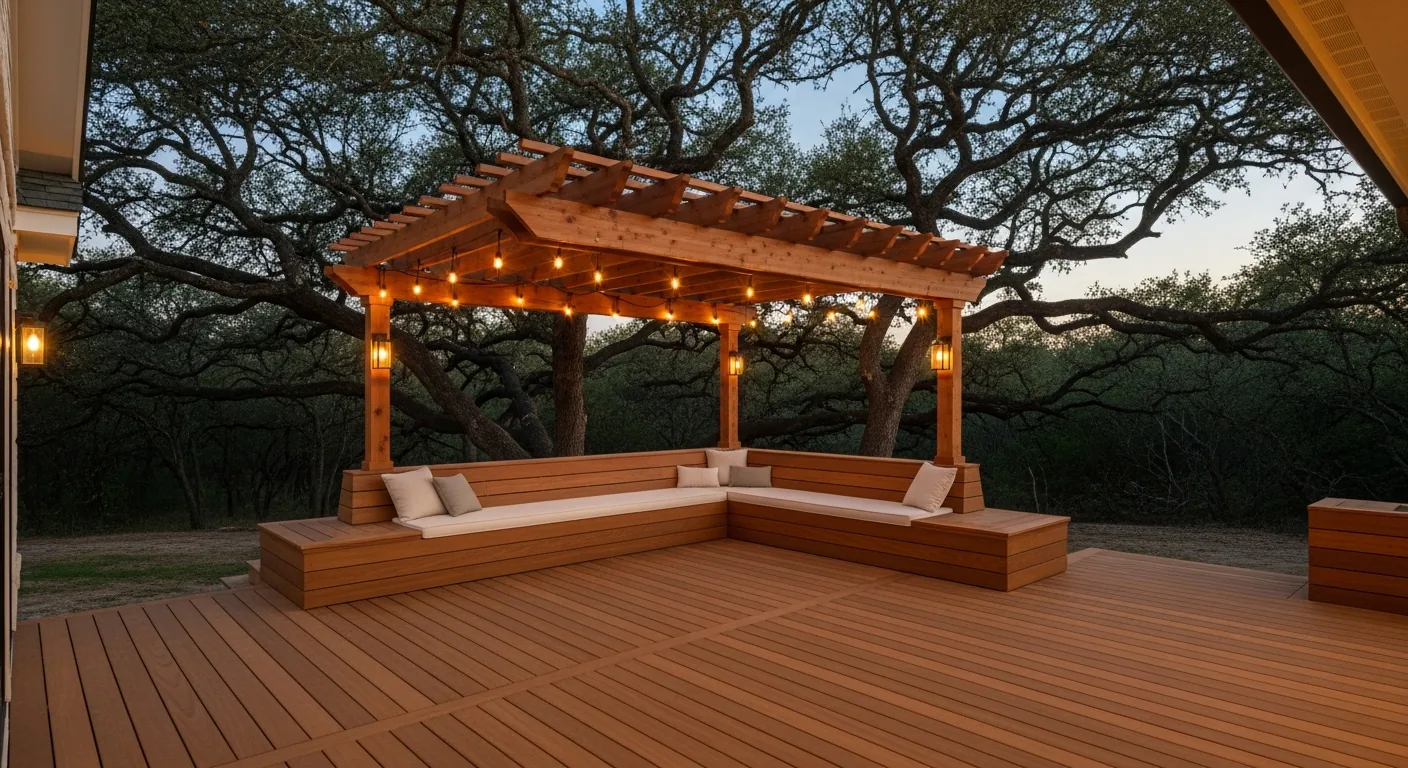
Decks, pergolas and covered living space designed around shade, drainage and the way the sun actually crosses your yard.
Decks & Outdoor Living
A deck in Central Texas has an easy job eight months a year and a brutal one for the other four.
Ground temperatures here regularly push past 140°F on an exposed surface. Composite that's fine in Ohio can get too hot to stand on barbecue-barefoot in July. Softwood that isn't detailed for drainage cups and splits after two summers of downpour-then-drought.
So material choice isn't a style question, it's a comfort question. We'll walk your yard, work out where the afternoon sun lands, and steer you toward decking and a shade structure that make the space usable in August — not just photogenic in April.
Structurally, we build to last: properly sized footings below frost and expansion depth, joists at the right spacing for the decking you've chosen, hidden fasteners, and flashing where the ledger meets the house — the single most common failure point on a bolted-on deck.
What's included
Ipe, cedar, treated pine or composite — chosen for how hot it gets underfoot as much as how it looks.
Cedar and steel shade structures sized and oriented to the sun path across your specific yard.
Engineered footings, correct joist spacing, and a properly flashed ledger connection to the house.
Cable, steel and timber railings built to code heights without walling off the view.
Bench seating, planters and privacy screens integrated into the structure rather than bought and placed.
Low-voltage step and rail lighting, string-light anchor points and weatherproof outlets run properly.
How it works
We look at drainage, grade, tree cover and where the afternoon sun actually lands before drawing anything.
A layout with sizes and heights, and material samples you can hold — including how hot each one gets.
Footings, posts, beams and joists, with the ledger flashed and bolted to the house correctly.
Decking, railings, skirting, lighting and a final clean — usually inside a fortnight of framing.
Recent work
Covered deck and pergola at dusk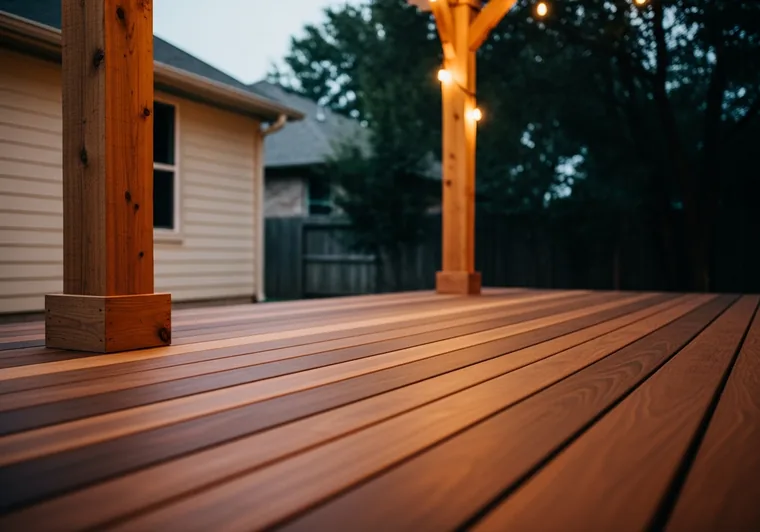 Ipe decking and cedar post detail
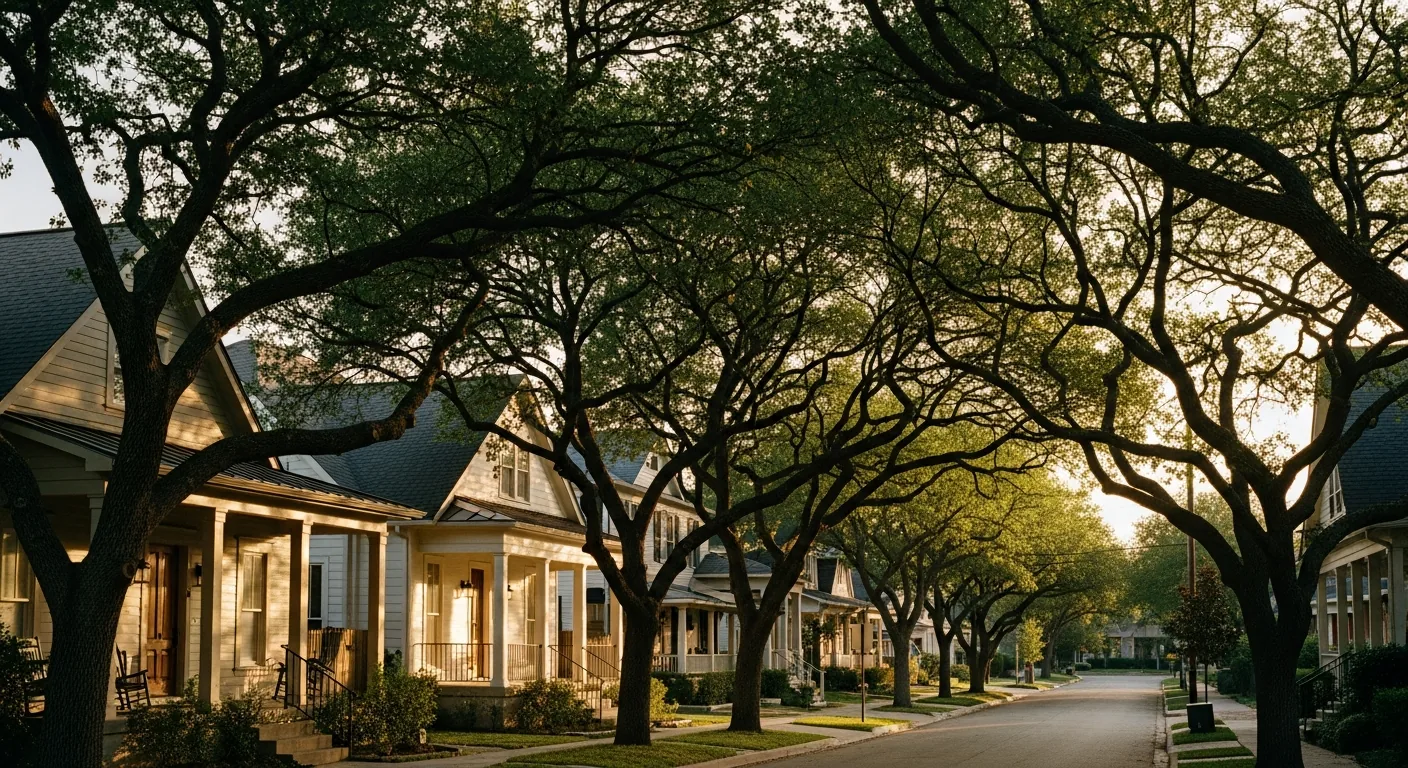 Central Texas homes we build for
Questions
Can't find your answer? Ask us directly — we usually reply the same day.
Both work if detailed right. Composite is lower maintenance but some boards get very hot in direct sun — we'll show you surface temperatures rather than just colour swatches. Hardwoods like ipe stay cooler and age beautifully but cost more up front.
Usually yes above a certain height, and always if it's attached to the house or has a roof. We handle the permit and the inspection.
Most decks are 2–4 weeks depending on size, whether there's a cover, and how long footings need to cure. Weather is the main variable.
Often, but the existing footings and framing have to be able to carry the extra load. We'll check what's there before quoting a cover — sometimes reinforcing is cheaper than rebuilding, sometimes it isn't.
Also from Fox
Get Started
Book a free consultation and we'll walk the space, talk through scope, and put a realistic number on it. We serve Taylor, Hutto, Round Rock and Georgetown.